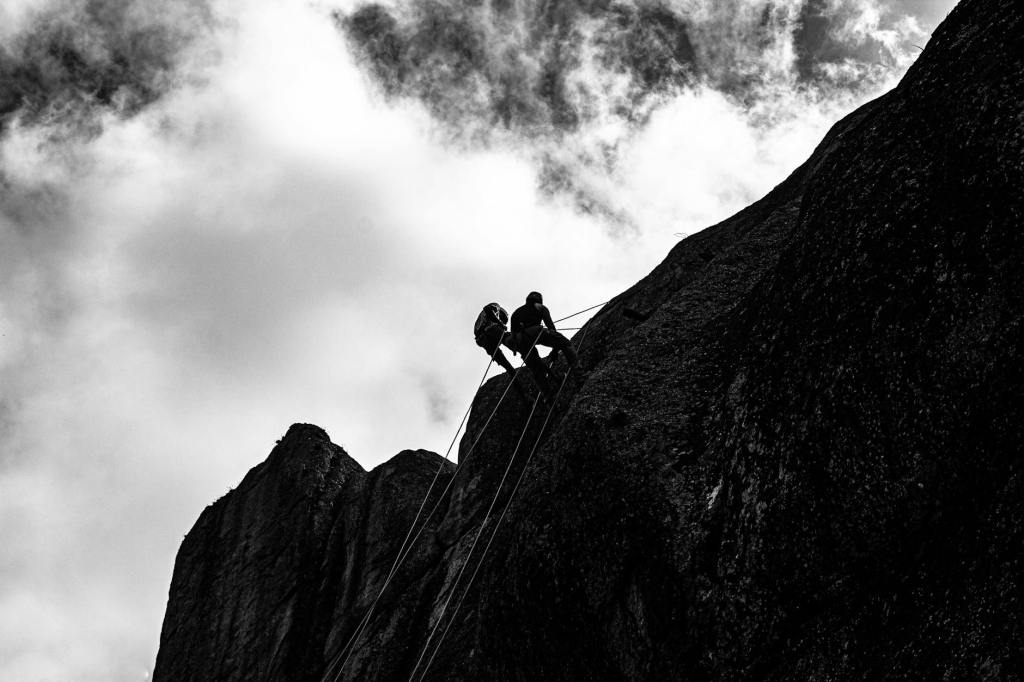
Mission
We help people do hard things, sustainably, by combining practical skills with deep personal insight and community connection.
You don’t need to become invulnerable. You need to become more human.
Via Dura Approach
Building Capacity Beneath the Performance
People in demanding fields are often given more tools. Sometimes it is a new communication model. Sometimes it might be a checklist. Maybe you learn how to read a balance sheet or how to create a strategic plan. Those things can be useful. Via Dura uses practical tools as well. But tools alone do not change the way a person shows up under pressure. They do not automatically make a leader more grounded in a hard conversation. They do not make a team more honest when trust is low. They do not help someone stay steady and calm when the stakes are high and there is no obvious right answer.
In those moments, something deeper is being tested.
It’s not skill or ability. We believe it is capacity. It is the capacity to see clearly. It is the capacity to stay connected to oneself and to others. It is the capacity to be able to sit with uncertainties and not feel the need to move anywhere just to relieve the pressure. It is the capacity to act with discipline and courage even when it is hard.
This is the work of Via Dura.
We help leaders, teams, and organizations use the pressure of demanding work as a path for development. Not simply to perform better, but to become more capable of meeting the work in front of them. That kind of growth is often called vertical development. It is not just about learning more. It is about becoming more able to lead in the midst of complexity, responsibility, and pressure.
Pressure is the starting point
Via Dura does not treat the pressures that show up in hard work as an interruption or something to be avoided. They can show up at any time. It could be a strained team with an unresolved conflict. It might be someone taking on a new leadership role. It could be having to tell someone a hard truth. These are not the distractions from the real work. They are the real work.
Pressure reveals the patterns that are already shaping how we lead. It shows us where we become reactive or where we withdraw. Maybe we are working to protect an old identity or possibly we are confusing urgency with importance. Maybe our fear starts making decisions for us in hard moments. At Via Dura, we don’t see this as failure. These moments provide us with information. The goal is not to judge the pattern or the feeling or the action. The goal is to see it clearly enough that something new becomes possible. When people can see their own patterns of thought they gain more choice. And choice is where development begins.
How capacity develops
Via Dura uses a simple developmental cycle:
Pressure → Pattern → Choice → Practice → Integration
This is not a formula and it sometimes doesn’t go in a straight line. But, it is a useful way of understanding how growth happens in real life.
Pressure
We begin with a real situation with the actual pressure the person or team is facing. Pressure gives us the entry point because it shows where current capacity is being tested.
Pattern
Next, we look beneath the surface. Patterns are not always obvious from the inside. They often feel like reality. That is why reflection matters. Coaching, facilitated conversation, and honest inquiry help people step back far enough to see what is happening while it is happening. Once a pattern becomes visible, it becomes workable.
Choice
When a pattern or way of thinking remains unseen, it can run the show. But when it becomes visible, choice becomes possible. Choice does not mean the situation becomes easy. It means the leader is no longer trapped inside a reaction that had become automatic. With choice, there is more room for a better question, a more honest conversation or a different pace to emerge. This is the central movement that coaching and intentional development can bring. It can take something from being an automatic reaction to a conscious response.
Practice
Insight alone is not enough to make durable change in one’s life. Development has to be practiced in the work itself. The truth is a new awareness becomes meaningful only when it changes the next meeting, the next conversation, the next decision or the reaction in a hard moment. Via Dura helps leaders and teams design small, concrete experiments that can be tested in real life. This is where practice turns insight into behavior.
Integration
Over time, repeated practice can become a new capacity. What once required effort becomes more natural. Integration doesn’t mean perfection, though. It means that the person or the team has more range of choice. And, this is the aim of Via Dura. We don’t want to create just a temporary breakthrough for our clients. We want them to obtain a deeper capacity that can be carried forward in the hard work that they do.
The Capacities We Build
Via Dura works across three dimensions of development: inner capacity, relational capacity, and practical capacity. These dimensions are connected. A leader’s inner life affects their relationships. Their relationships affect the team’s ability to work. The team’s way of working shapes the system around them. Development has to address all three.
Inner Capacity
Inner capacity is the ability to understand and work and one’s self. It includes self-awareness, emotional steadiness, values clarity, identity development, attention, discipline, and the ability to notice internal reactions without being ruled by them. This is especially important in high-pressure work. When pressure rises, people’s vision often narrows. They can react faster and listen less. They become more certain and act more defensively or controlling. Inner capacity allows leaders to stay more open and more disciplined.
Relational Capacity
People can’t achieve great things alone. Leadership happens through relationships. Relational capacity is the ability to build trust, listen deeply, communicate honestly, navigate conflict, and create conditions where people feel safe. Teams do not become effective simply because they contain talented people, although that can help. They truly become effective when people can think together under pressure. That requires a leader who can make it safer to tell the truth, name risk, challenge assumptions, ask for help, and stay connected through difficulty.
Practical Capacity
Development also requires structure. Practical capacity includes the habits, systems, rhythms, tools, and shared values and norms that help people do hard work with greater clarity and less unnecessary friction. This may include better meetings, clearer roles, stronger decision processes, more intentional communication, healthier boundaries, better time stewardship, or team norms that make trust and accountability more likely. Practical capacity matters because even deeply self-aware people can struggle inside poorly designed systems. Via Dura brings the inner and outer work together.
Grounded in Research and Practice
Via Dura is evidence-informed and human-centered. The approach draws from several fields of research and practice, including adult development, vertical leadership development, executive coaching, psychological safety, team learning, emotion regulation, reflective practice, and performance under pressure.
The research points toward a simple but important idea: People do not grow only by receiving more information. They grow when experience, challenge, reflection, relationship, practice, and integration come together over time. Adult development helps explain how people grow in their capacity to make meaning, hold complexity, take perspective, and understand themselves. Coaching creates a structured space for reflection, experimentation, and behavior change. Psychological safety and team learning help explain why teams need trust, candor, and interpersonal risk-taking in order to adapt. Emotion regulation and performance science help explain why high-pressure work tests attention, judgment, communication, and the ability to respond deliberately rather than react automatically. Reflective practice and experiential learning remind us that development has to return to the real world. Insight matters most when it changes how a person leads, communicates, decides, and relates in daily work.
Via Dura is built from this intersection. It is practical enough to be used in real pressure. It is reflective enough to create real development. It is grounded enough to be taken seriously by people who care about evidence.
How the Work Comes to Life
The Via Dura approach can take different forms depending on the person, team, or organization.
The format may change, but the developmental approach stays the same. Via Dura uses real pressure, to surface a pattern, in order to create more choices. Then, we encourage practice in real work settings and then integrating this new capacity over time.
Individual Coaching
Individual coaching creates a confidential space for leaders and emerging leaders to examine real challenges, see their patterns more clearly, and practice new ways of leading under pressure. This work may focus on leadership identity, transition, conflict, decision-making, purpose, emotional patterns, role complexity, or the question of who the leader is becoming.
Team Experiences & Retreats
Team experiences and retreats create space for groups to step out of automatic patterns and examine how they work together. These experiences may focus on trust, communication, conflict, shared values, team norms, role clarity, operating agreements, or the emotional and relational demands of high-pressure work. They can take the form of a keynote, workshop, half-day session, full-day retreat, two-day intensive, group coaching experience, or longitudinal team development process.

